Bearded Dragon: Heat + Light Guide
In this article, we will explore the essential heat and light requirements necessary to keep your bearded dragon healthy and thriving in captivity. Understanding these needs is crucial for creating a suitable habitat that mimics their natural environment.
There are affiliate links in the article below that may earn me a small commission at no cost to you!
Heat for Bearded Dragons
Bearded dragons are ectothermic creatures, meaning they rely on external heat sources to regulate their body temperature. For optimal health, these reptiles require a gradient of heat in their habitat. The basking area should reach temperatures between 95°F and 110°F, allowing them to absorb warmth, digest food, and maintain their energy levels. To establish this temperature, you will need to use a heat lamp that will rest on top of the metal mesh top of your enclosure.
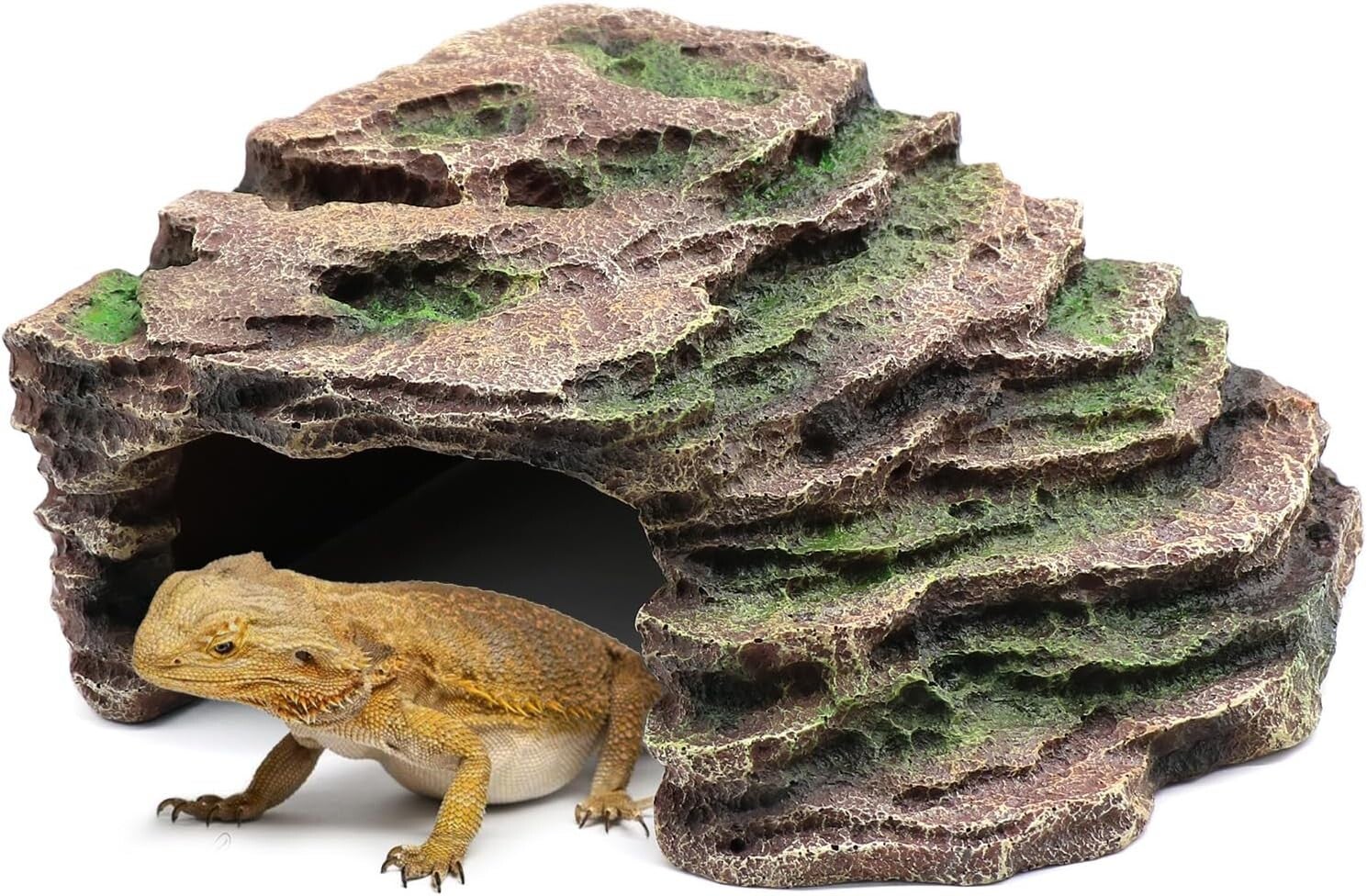
Bearded dragons should also have a cooler end of their enclosure should range from 75°F to 85°F, providing a safe zone for them to cool down when necessary. A good way to keep them cool is to provide a cave-like area where they can escape the light & heat. There are many options for this, but we use one like this.
It's essential to use a reliable thermometer (like this one) to monitor these temperatures accurately and avoid any extremes that could lead to health issues.
Light Requirements for Bearded Dragons (UVB)
In addition to heat, Bearded dragons require a specific range of light to thrive, particularly UVB light, which is essential for their bone health and overall well-being. Providing UVB lighting simulates natural sunlight, allowing them to synthesize vitamin D, which is crucial for calcium absorption.
It is recommended to use a UVB bulb that emits 10-12% UVB rays and to position it within 12-18 inches away from the basking area in their enclosure. Regularly replace UVB bulbs every 6-12 months, as their effectiveness diminishes over time, even if the light still appears to work.
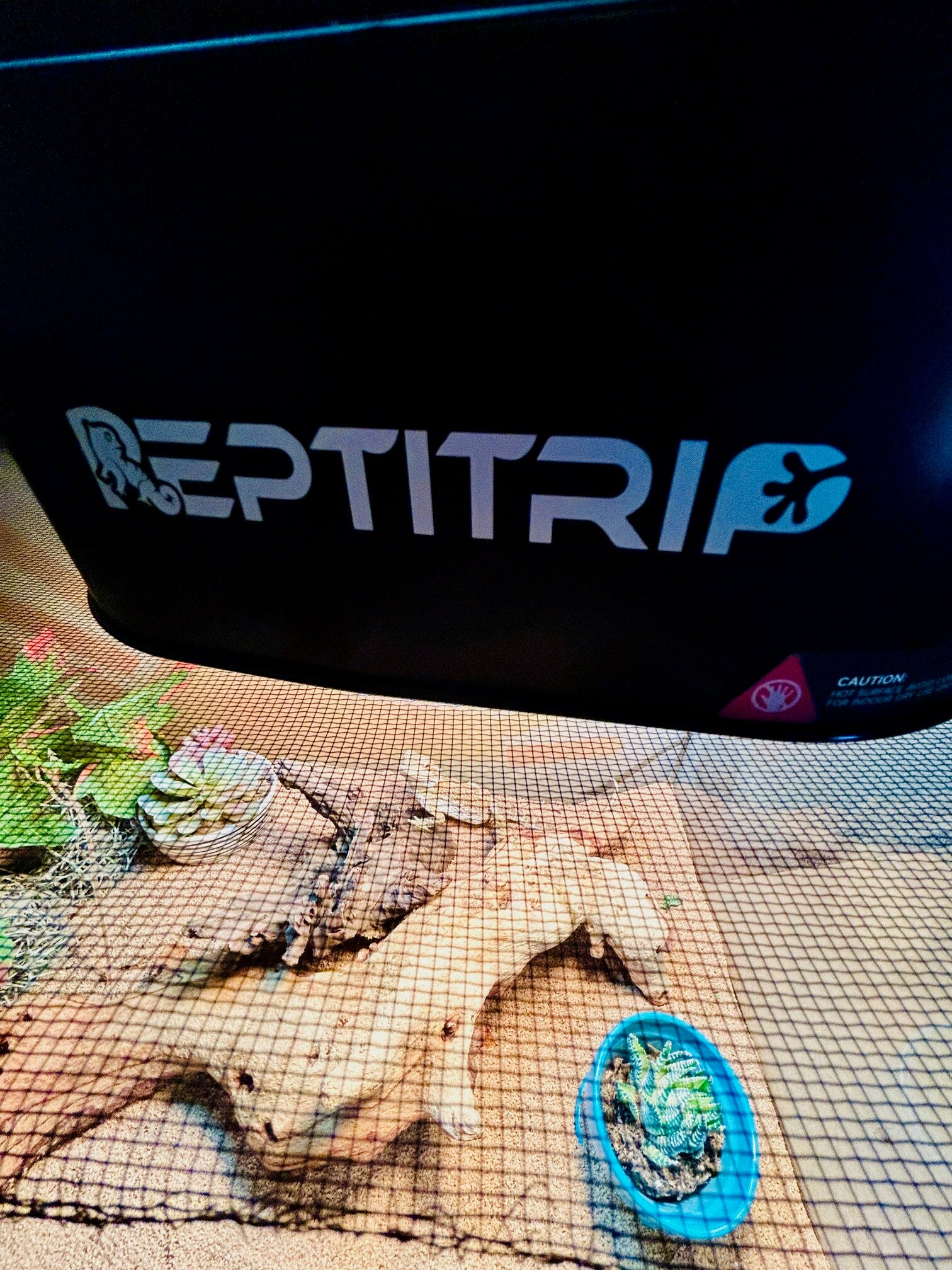
Local pet stores carry reptile heat lamps, and we got ours at the exotic pet store close by. We did have to replace ours, and we went with ReptiTrip's Dual Lamp that has capability for both UVB light and Heat.
Whatever option light you decide, I would DEFINITELY purchase a timer for your lamp, as you will need to turn it on an off everyday. It's best for the lamp to turn off and on at the same time everyday to help your lizard build its circadian rhythm.
Bearded Dragons sleep between 8-12 hours a night. We have ours set to go off at 8pm, and it turns on at 7am. That's 11 hours of night, and 13 hours of light & heat. The timer makes having the bearded dragon much more simple as it helps establish the most important element for your lizard.
Driftwood Logs & Rocks to Bask
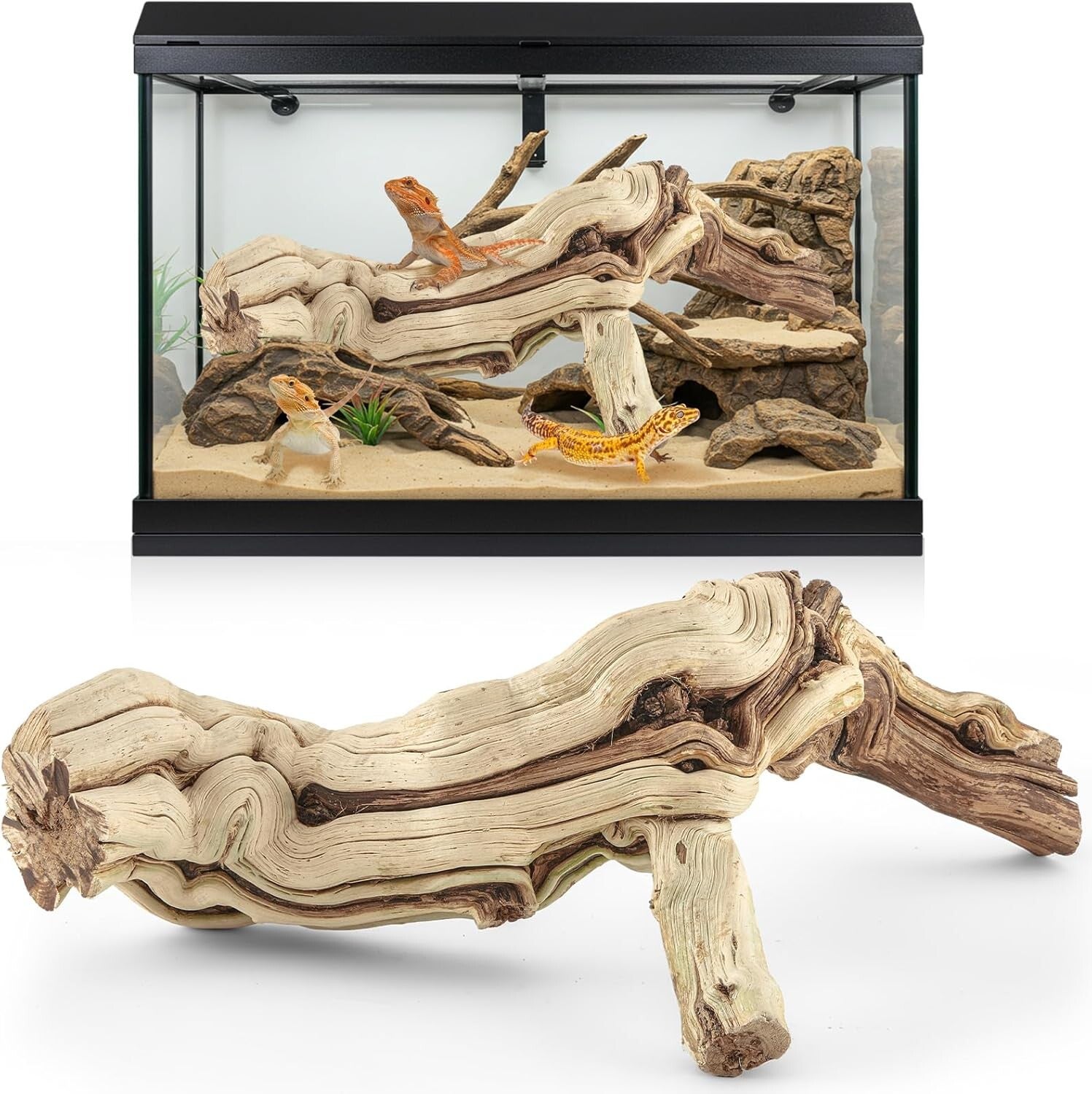
An essential accessory to the Bearded Dragon enclosure is a large, sturdy piece of driftwood that sits directly beneath the basking lamp. This strategically placed driftwood not only allows the lizard to get close to the vital heat and light needed for its health but also provides another safe space for the creature to crawl under, helping it to escape the intense heat and bright light when it desires to retreat. This is our Bearded dragon's favorite spot. You can explore many options for these beautiful pieces of driftwood, as they come in various shapes and sizes; they are also conveniently available for purchase on Amazon here.
A hammock is another fun accessory to add to the dragon's enclosure. Incorporating climbing structures can significantly enhance your dragon's habitat. These structures provide exercise opportunities and mimic their natural environment, allowing them to engage in instinctual behaviors like climbing and perching. Whether using branches, rocks, or commercially available climbing toys, these elements not only stimulate your dragon mentally but also contribute to their physical health, ensuring they remain active and stress-free
Create Your Own Website With Webador