Bearded Dragon: Habitat Guide
There are affiliate links in the article below that potentially earn me a small commission, at no extra cost to you!
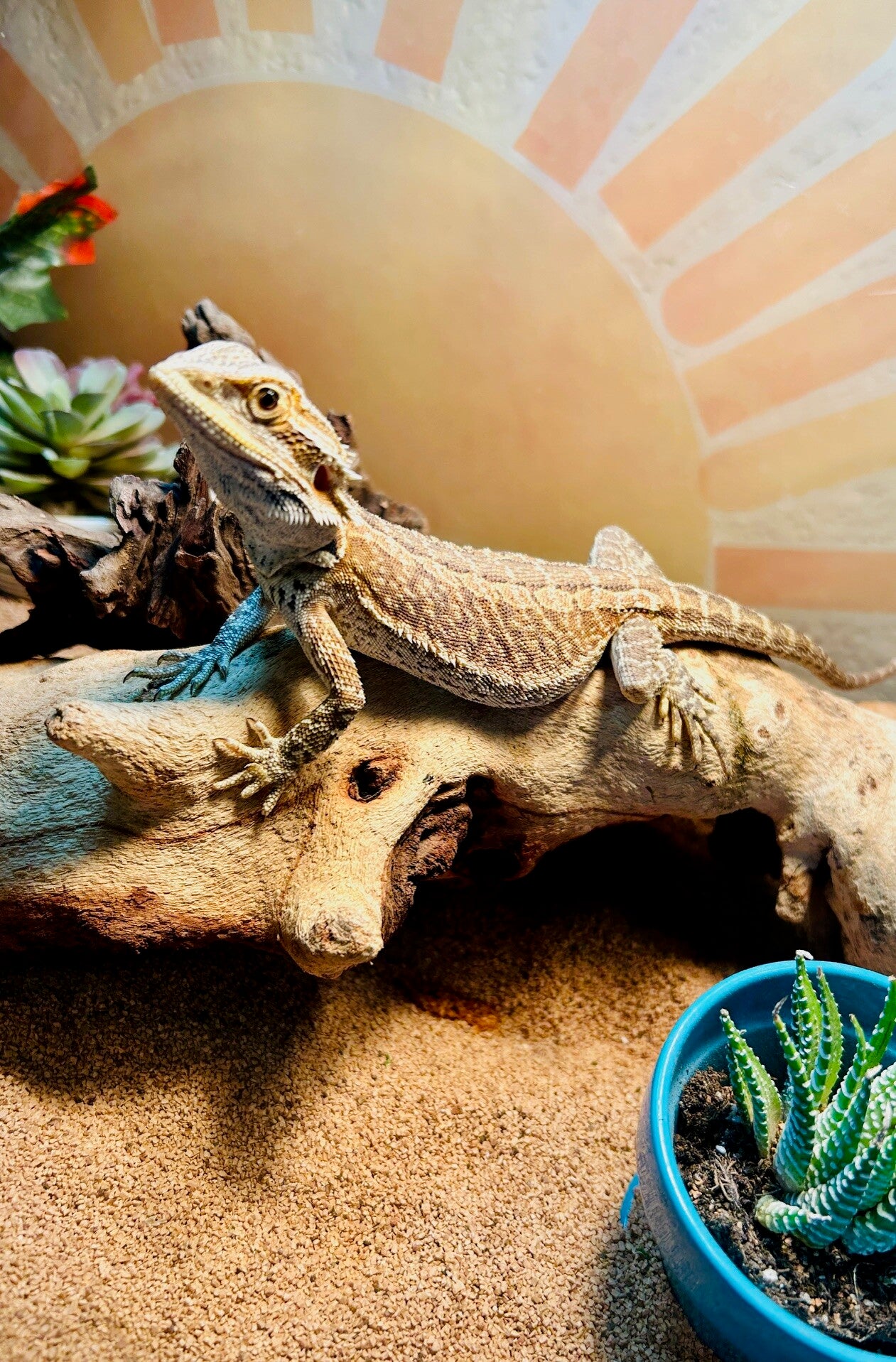
Habitat: Enclosure
The first and most obvious decision when purchasing an enclosure for a "Beardy" (as the Bearded Dragon community calls them), is to decide how big of a tank to buy. We started small since we had a baby Beardy, but he is close to outgrowing it, so we are about to upgrade to a 100 gallon tank. A 75-100 gallon tank with a metal mesh top for the lamp is the understood minimum size tank for a bearded dragon.
If you are just starting out with a baby beardy and need a quick solution before upgrading to a larger tank, I would recommend this travel terrarium with a mesh metal top. You could also save it for travel and transporting the lizard when needed. Or, if you're a teacher who is brave enough to make this a class pet, this small travel carrier would be a good option for students or yourself to bring the pet home over the weekend and holidays. Just be sure to purchase a smaller heat lamp that fits it such as this one.
The second most important quality of the tank is its ability to house the lamp. The lamp is large and is essential for the survival of a Bearded Dragon. DO NOT use a regular fish aquarium with a glass top, or any other tank advertised as a reptile tank as the glass will hinder the appropriate light from getting through. It must have a metal mesh top. If you do have an open fish tank or find one for discount on Facebook, you could simply purchase one of these metal mesh screen tops from Amazon to rest on top to make more of a DIY tank.
To read more about Heat + Lighting for Bearded Dragons, click here.
They do sell tanks for Bearded Dragons that are quite large and the intent is to hang the lamp inside the entire closure. This is absolutely an option but will require a bit more DIY and increase cost.
Habitat: Flooring
The second most important element of a Bearded Dragon's Enclosure is the flooring. There are 3 popular options for them depending on how natural of a habitat you'd like for the lizard and how dedicated you are to cleaning.
1. Natural Sand: This is the most common choice as it is the most natural. It can be harder to clean. You will need a mesh metal scooper to clean out the poop, similar to a cat's litter box situation. It also may get into the food, but it isn't terrible if you're okay dealing with it. We chose sand for our habitat and I both love and regret it, but our Beardy loves it. He nestles into the warm sand at night and feels right at home.
2. Faux-Sand Mat: This is a good option the lizard as it still provides a sand texture and does not get into the food.
3. Rubber Mat: The choice for those looking for an easy-to-clean option. You can easily spot-clean and it is still safe for the lizard. It's not a natural environment, and it could potentially get too warm in spots, but it would still work. We do use this option when we travel for ease of cleaning.
Habitat: Vegetation (Succulents + Aerial Roots)
This is the fun part: decorating your Dragon's enclosure with vegetation. You can go natural OR fake, and we use a combination of both. My son enjoyed adding the Zebra Haworthia shown in the picture to the right. We also have a fake succulent and a fake vine just for decoration. Just be careful when putting live plants in the cage to do a bit of research to make sure it isn't toxic. Most succulents are in the clear, but do not use any cactus with needles.
This would be a great time to educate your child on succulents and other natural plants. Do a mini lesson on aerial roots, succulents, and cacti.
My favorite addition to our Beardy's cage is the moss ball called Tillandsia Recurvata. They grow like weeds in Texas trees, are a type of moss/herb combination, and have amazing aerial roots, meaning you can water them without planting them. Super cool. Learn more about them here. They are non-toxic to bearded dragons if ingested, and very easy to maintain.
Keep your plants (and beardy) watered with a simple spray bottle! This makes watering them easy-peasy and your dragon will enjoy a nice shower, too!
Are these necessary? No. Good to make a natural habitat? Yes.
So if you're looking for bare minimum or need to budget this for later, go ahead and save this part for later.


Tillandsia Recurvata, ball moss from South Texas
Ready to learn about Light + Heat Requirements for Bearded Dragons? Click HERE.
Create Your Own Website With Webador