
Can you feel it? The warmth of the Spring air, the inevitable blooming of flowers and plants all around you, the fresh green sprouts coming out of decomposing matter. It's all potential. Potential to grow, bloom, and grow, in need of someone to tend and care for it, and that is you, my friend.
That is what we are as gardeners and homemakers. We do not create life; we can not create the plants or animals (or tiny humans). That's God's job. But we can draw them in and welcome them; we can make hospitable environments in which creation can flourish. Just like Adam and Eve were entrusted with Eden, so we are entrusted with the plot of land we may own or rent, as big or as small as it may be. I've gardened and nourished large yards that I owned, small yards that were rented, and tiny urban-apartment-balconies that never even touched the ground. Wherever your housing may be, however large, however tiny, that is where you are entrusted.
Today we are going to welcome the hummingbird into our outdoor space by adding a hummingbird feeder.
Hummingbirds are one of God's most extraordinary creatures as they have the ability to flap their tiny wings between 50-80 times per second and fly up to speeds of 20-30 mph. Aside from their astounding mechanics and intrinsic beauty, they are also quite important to the survival of many species of plants; they are pollinators. Just like the bee, they drink nectar from brightly colored flowers and spread pollen between flowers as they do. Hummingbirds also like to eat many tiny pests that infest our backyard in South Texas. They eat mosquitoes, gnats, small spiders, and other small flying bugs. Read more about the hummingbird here. So, let's stop and appreciate all that the hummingbird was created for: pollinator, eater of mosquitoes, and fascinating spectacle for the eye.
Yes, I want that in my backyard. Yes, please.
Hummingbirds also seem to be a part of my family heritage. My Memaw had a fascination with nature (which I believe she inherited from her father who was a gardener), and she made everyone around her love nature more. One of her fascinations was the hummingbird. She lived in East Texas, and hummingbirds were just a part of the natural landscape. My youngest son has acquired an inherited love for nature and a shared fascination with these peculiar creatures, and since he has been begging me for a pet, I am making his dreams come true this spring by drawing them into our yard and welcoming them with a garden hummingbird feeder. The one problem is that there are actually no hummingbirds in our backyard right now. The freezing temperatures this winter seems to have scattered nature in general, specifically flowers, butterflies, bees, and even birds. So, we are in the process of revitalizing a once beautiful backyard. We've planted a couple of native plants, but we need those pollinators. And so, begins the hummingbird habitat journey.
As a classic millennial mother, I began my search for ideas both on Pinterest and Amazon, finding both products to purchase as well as DIY tutorials for kids to build a hummingbird feeder. We definitely tried those out. See images below! I came across Kaytee Backyard Basics Hummingbird Food for $9.99 on Amazon. It's a natural product that includes electrolytes for our active little friends. It's definitely in my Amazon cart, but in my efforts to remain frugal, I decided to try out making my own formula first. Click here for an expert recipe and advice on making homemade hummingbird nectar.
I'll summarize it for you:
Homemade Hummingbird Nectar:
1 part sugar to 4 parts water (1 cup of water : 1/4 cup sugar)
Easy-Peasy. We did that and set it up in our homemade DIY hummingbird feeders that we made with random pieces around our home. Feel free to peruse Pinterest yourself for actual DIY plans, but it's always fun to create with what you have by using a little imagination.
Disclosure: This post contains affiliate links, which means I earn a small commission off links added to this post --at no additional cost to you!
Basics of a DIY hummingbird feeder:
1. A base that has red, orange, pink, or yellow (These colors attract hummingbirds. These plastic flowers from Amazon would be incredible to add, especially if you're using this project as a classroom craft.)
2. A hole or small opening in the lid (You can use a drill to make neat holes. It's the perfect time to bring out your kid's drill set.
3. A container that can hold sugar-water. (Mason jars work great and are very pretty.)
4. A string or hook to hang the feeder. (We used craft yarn, but craft twine or craft rope would be more substantial.)
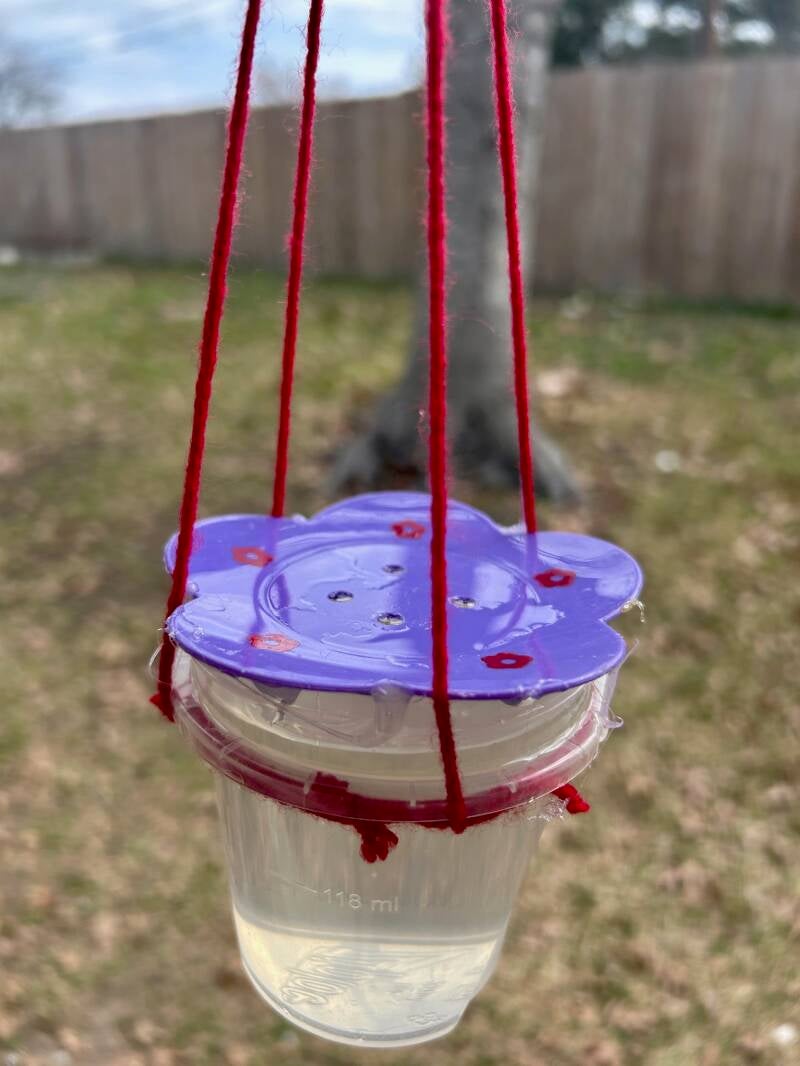
A plastic storage cup filled with nectar water hung by a piece of red yard. We hot glued an old tea cup saucer that we snagged from our toddler's playbox onto the top of the cup after drilling 4 holes into the top.

An antique hand-me-down from my Memaw's side of the family, filled with nectar water instead of gasoline, lined with origami flowers made by my oldest child.
After you've made your nectar, it may take a week or so for hummingbirds to find your feeder! We are still waiting, but it is still early spring and they may still be migrating from Mexico. They will surely come! Hang your feeder in a place that you will be able to see it frequently to give you more opportunities to spot them! Once they come around, you will need to refill your feeder frequently.
If you'd like a more sophisticated or long-lasting hummingbird feeder rather than a DIY kid's project, I'd recommend purchasing a Tube Feeder like these on Amazon and filling them with Kaytee Hummingbird Food. I've listed my top 5 in order of most frugal to family-heirloom, classy-gardener extraordinaire.
1. 2-Pack Hanging Red Feeders $19.99
2. Glass Hummingbird Feeder $24.99
3. Garden Pole Hangers for Plants and Hummingbird Feeders $25.99
4. Hand Blown Glass Hummingbird Feeder $24.99
5. Hand Blown Glass Hummingbird Feeder $44.99
Disclosure: This post contains affiliate links, which means I earn a small commission off links added to this post --at no additional cost to you!
Are you more of a song bird or wild bird kind of person? Explore the informational graphic below by Kaytee Backyard Basics. It makes me want to add a welcoming spring bird bath like this one.

Kaytee Backyard Basics Informational Graphic showing three types of hummingbird feeders to use in backyards. From left to right: Hopper Feeder, Platform Feeder, and Tube Feeder. Below is information about providing food for birds year round through winter, summer, spring, and fall. Further below is a tip to also provide water for hummingbirds to drink and bathe; this will attract them longer. Further below is information about placing feeders near shrubs and trees.
Create Your Own Website With Webador